
Eduard Steinberg: Post-Impressionism to Post-Suprematism
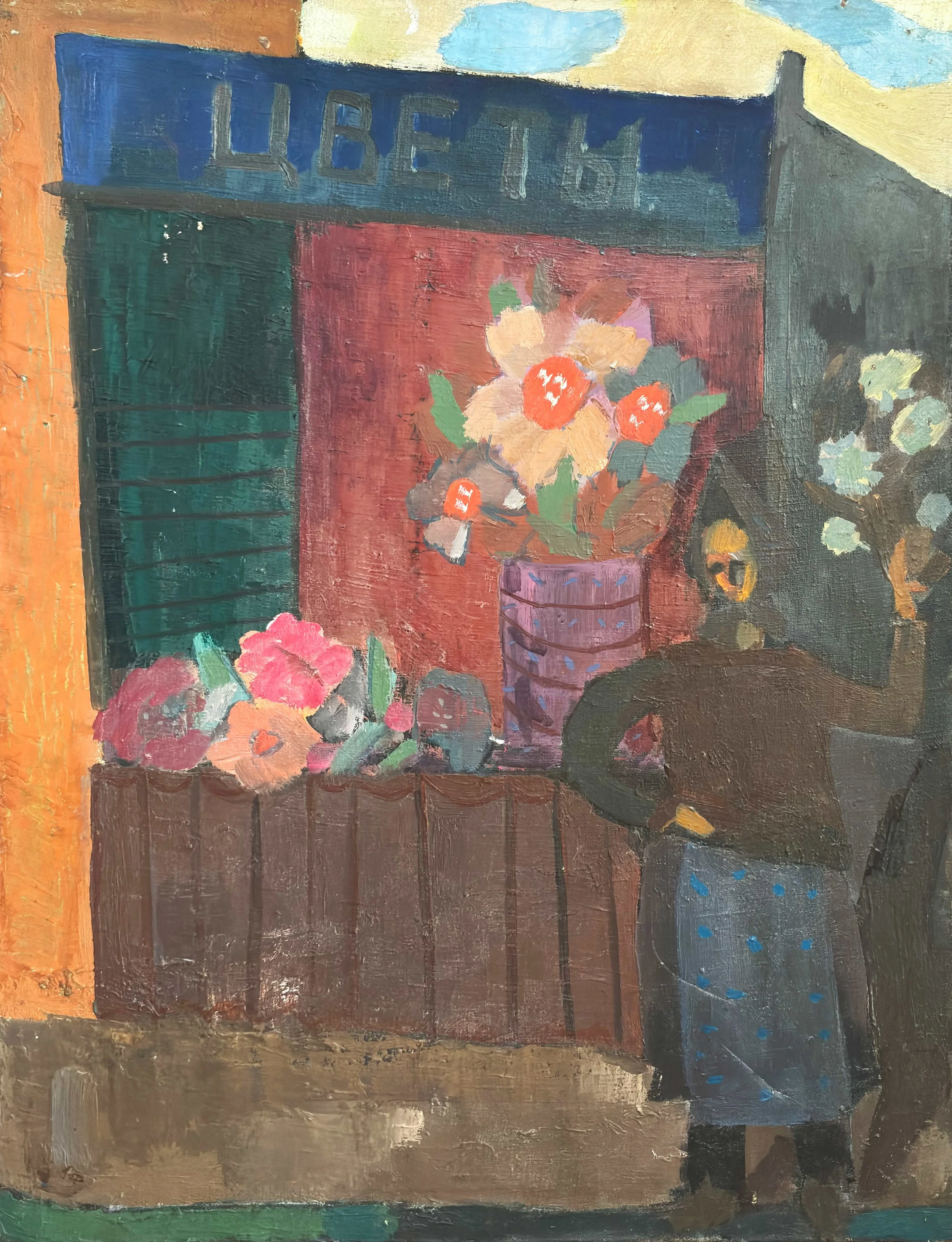
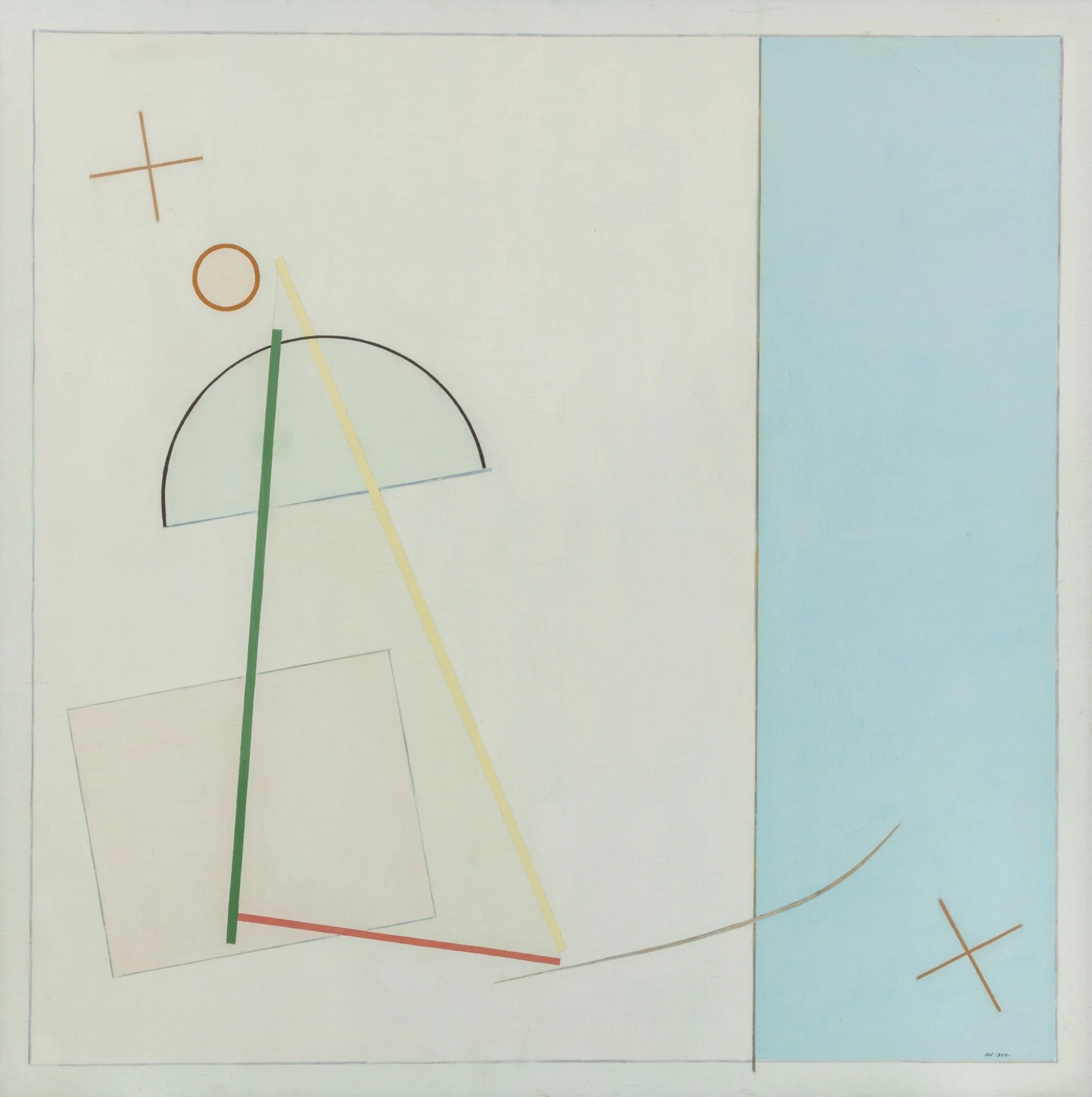
In this concept project, we have selected eight works from our collection that showcase key developments in Eduard Steinberg's oeuvre: from one of the earliest figurative works to his late metaphysical abstractions.
Eduard Steinberg was a Russian Non-Conformist artist, part of the second wave of Russian avant-garde. Steinberg grew up in Moscow and Tarusa, a small town just over 100 kilometres from Moscow. Specifically because of its location in relation to the capital, Tarusa became a vibrant community of artists, poets and scholars who opposed the Soviet regime.
Eduard Steinberg never received a formal artistic education, however, his environment - both social and natural - in Tarusa played a very important role in the development of his artist self.
Steinberg began painting in the early 1960s, his first works are figurative and show a great influence from both Russian and European masters including Mikhail Vrubel, Victor Borisov-Musatov, Paul Gauguin, Vincent Van Gogh and Pablo Picasso. Steinberg absorbed the colour, line and composition of his influences while translating it to his unique subject matter: life in a Russian village. With his confidence growing, Steinberg began to experiment more freely with colour and composition. Still largely figurative, his works from the late 1960s depart further from the state-dictated Socialist Realism. Many paintings in this period are landscapes and still lifes, populated with stones, sculls and birds. The effect of blending the background and foreground results in a feeling that the objects emerge from the clustering of dense background but can at any moment disperse back into the painting.
In the 1970s Eduard Steinberg began to configure the special language of geometric symbols and colours that he will continue to use in his works. Here he begins to re-think the philosophical, spiritual and visual receptions of Classical Antiquity. Floating geometric shapes in his canvases are dictated by the rules set by Pythagoras and Plato and expressed in early Christian wall paintings. A part of this connection with Classical Antiquity and specifically the visual culture of early Christianity is a response to the suppression of religion in the Soviet Union.
Beginning with the collages of the 1980s - Steinberg transitions to Post-Suprematist Geometry. After this more and more he begins to include words, numbers and reminders of the everyday. Most fitting for this description is the so-called ‘Village Series’ 1985-1987. This series while short was very productive and greatly altered the future course of Steinberg's style and painterly techniques.
In the 1990s Steinberg builds further on the Post-Suprematist works of the 1980s. Metageometry in the sense that it is adopted by Steinberg is based on the Greek 'Meta' meaning: together, after, following. His vocabulary of geometric shapes expands as he reconfigures mathematical, philosophical and visual histories of geometry to finally arrive at his unique approach. The symbol of the cross becomes increasingly important and other shapes too become imbued with spiritual meaning. The combination in Triptych - A Fish from the Town of Semenov (1990) of the fish and cross at the centre of the triptych reinforces Eduard Steinberg's connection to the underground religious practice in Russian communities. He felt deeply for the people who have been made to lose God, a forceful godforesakenness of Russia and its isolationism following over 70 years of totalitarian communism.
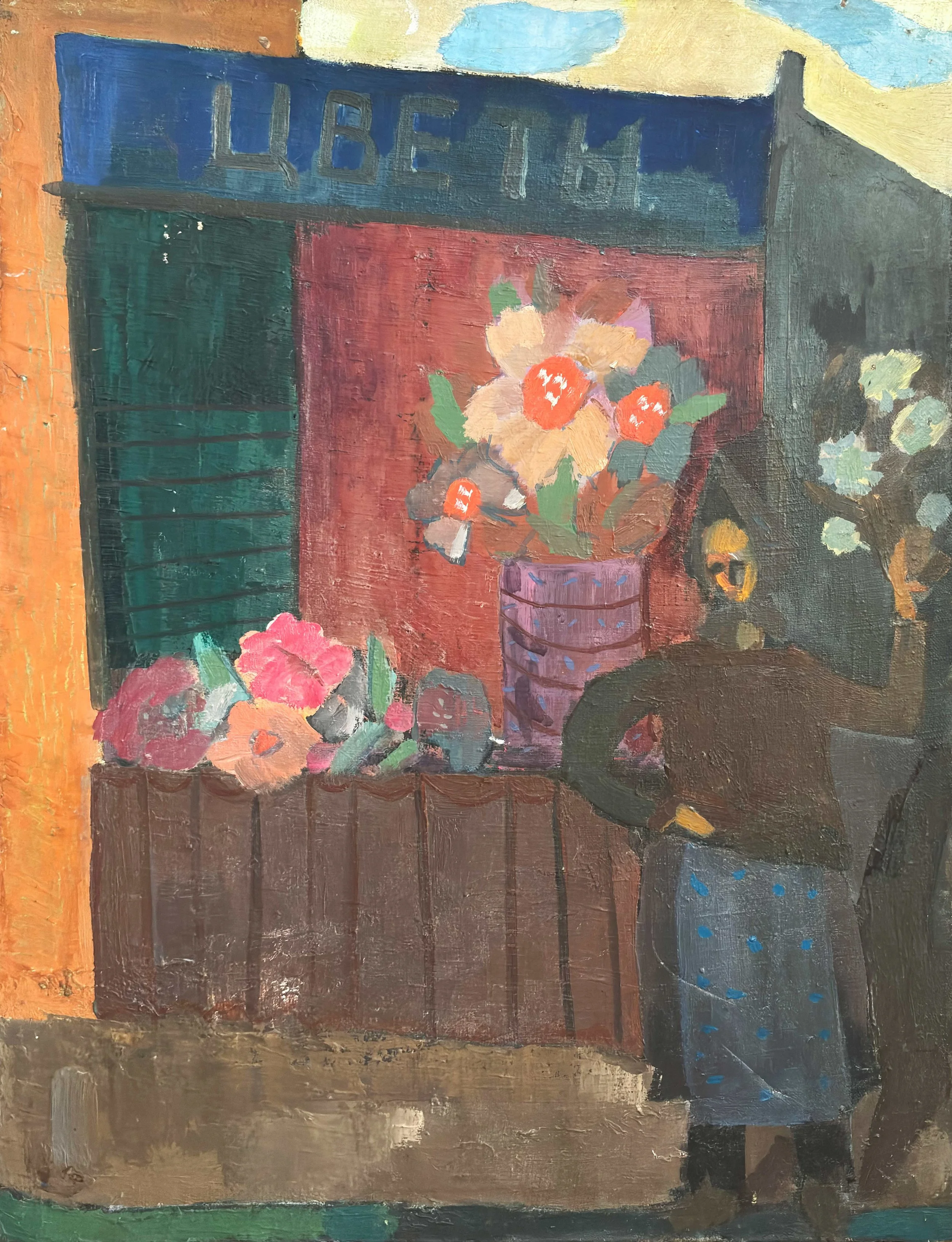
Eduard Steinberg, Flowers, 1962
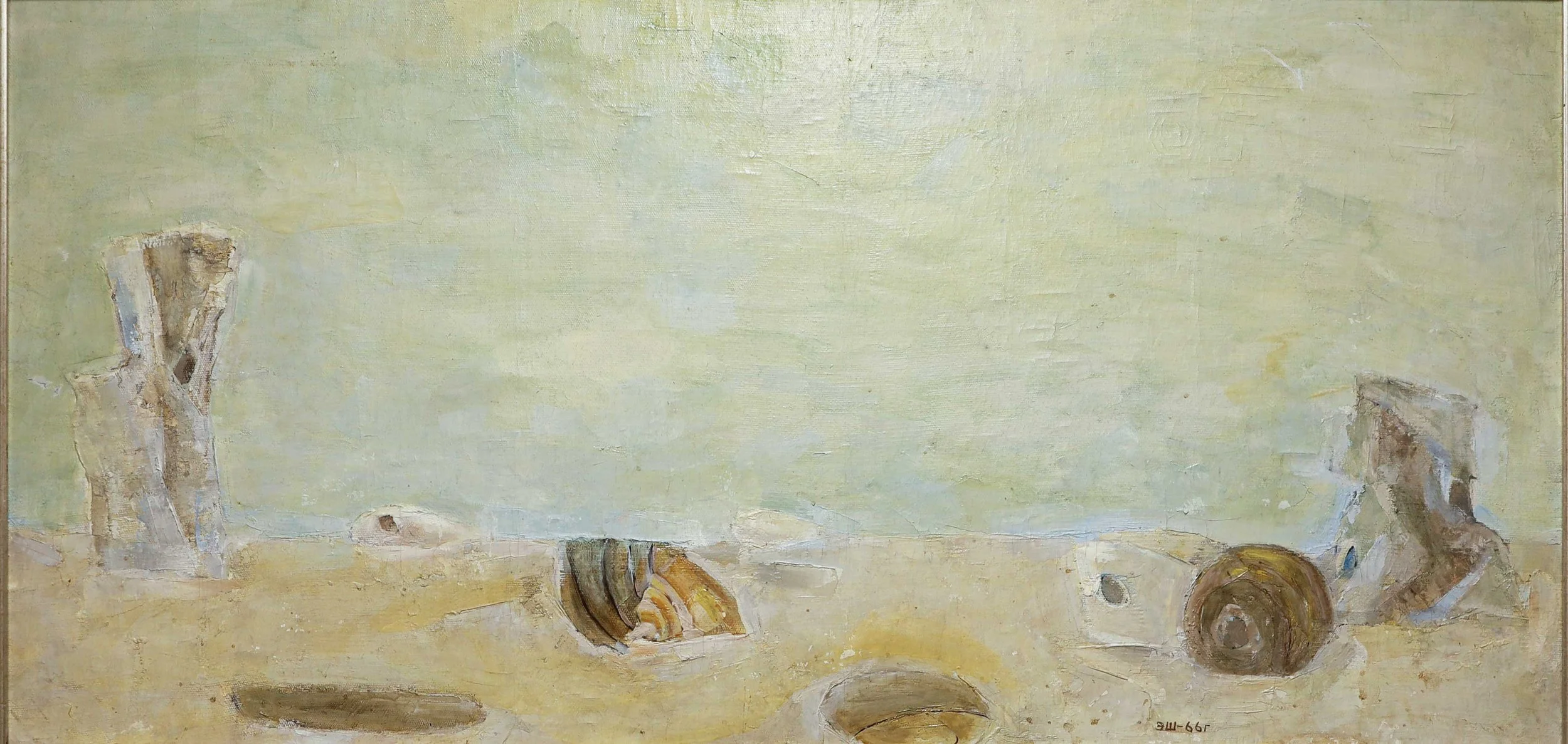
Eduard Steinberg, Landscape with stones, 1966
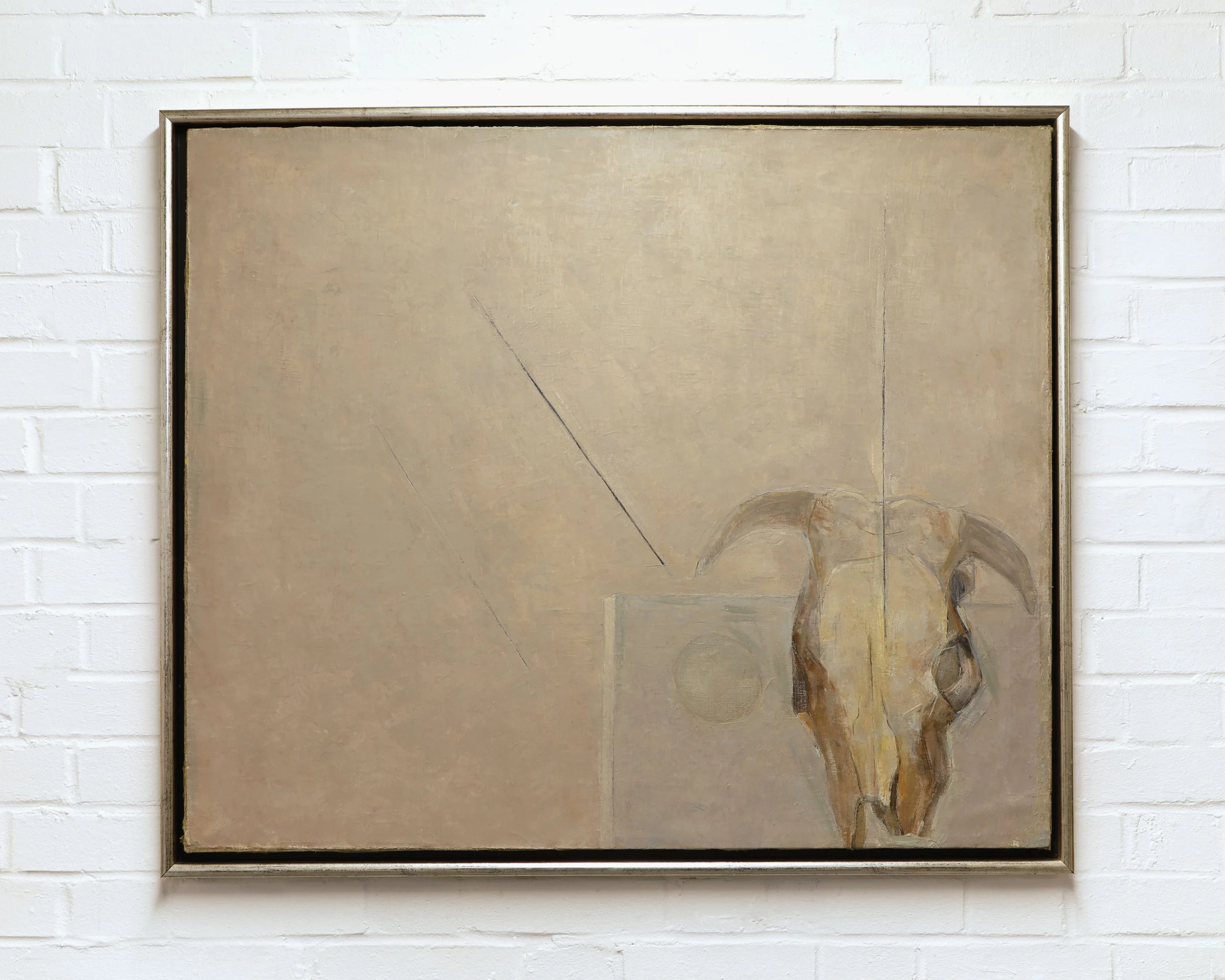
Eduard Steinberg, Composition with skull, 1969
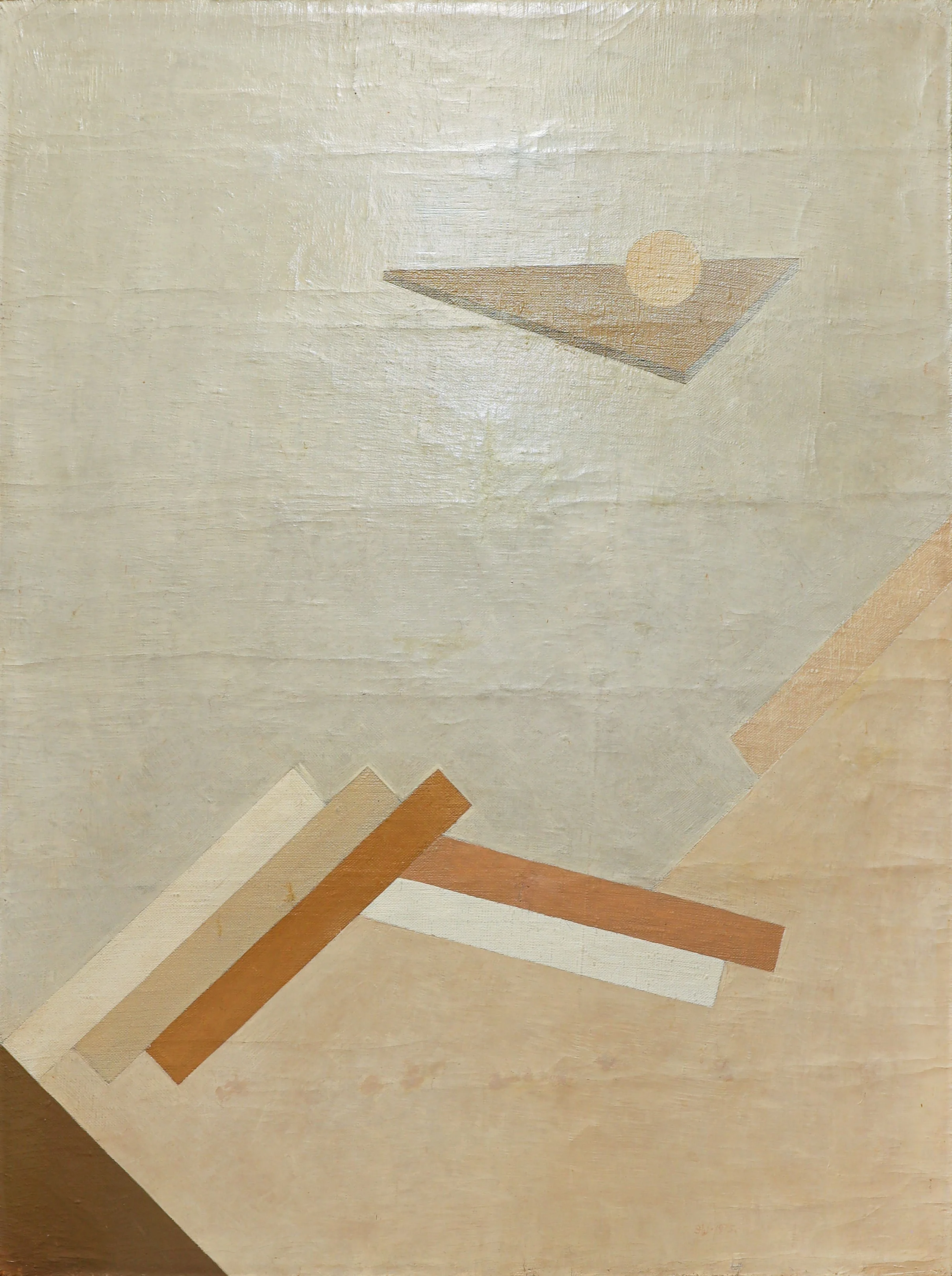
Eduard Steinberg, Composition, 1975
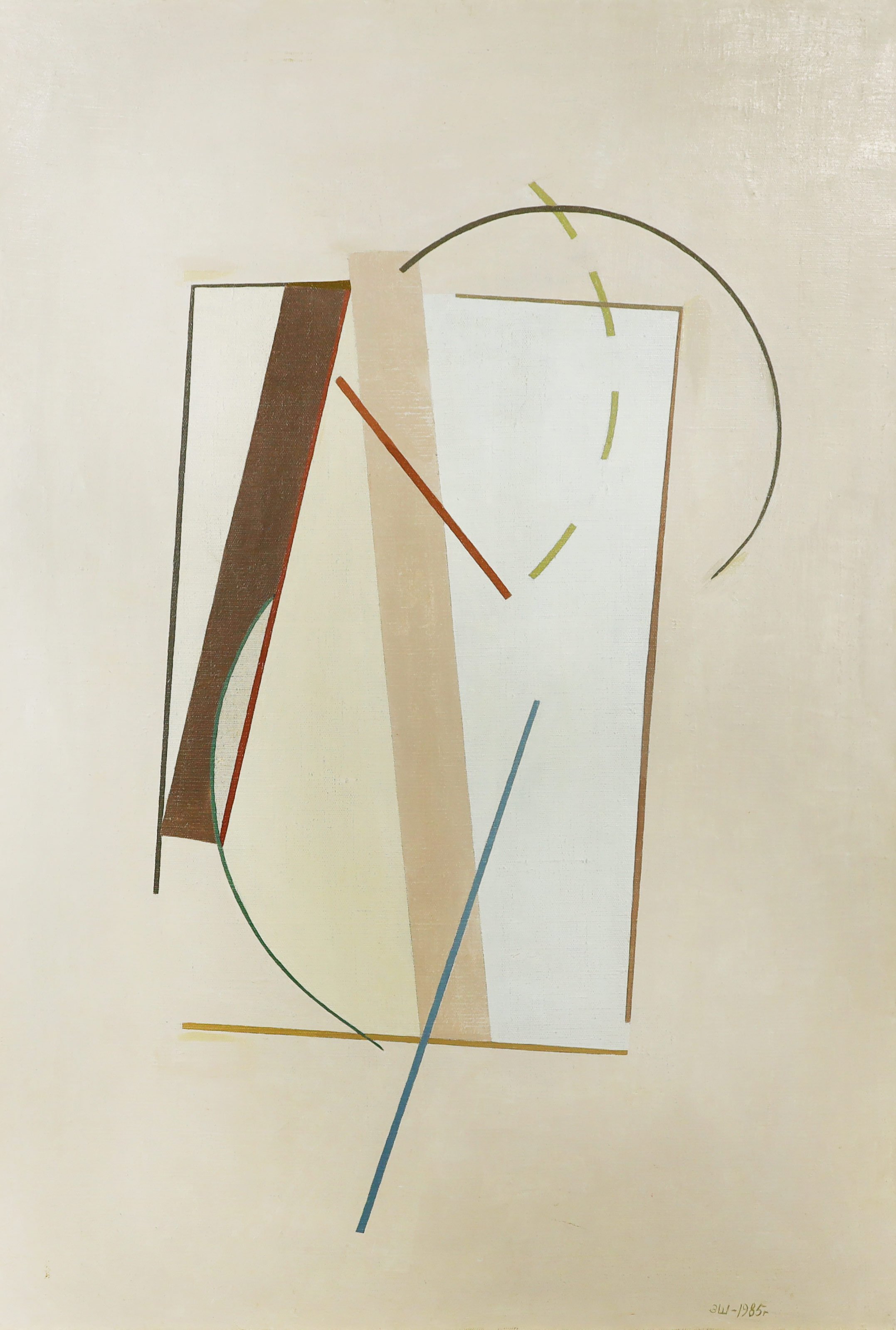
Eduard Steinberg, Composition, 1985
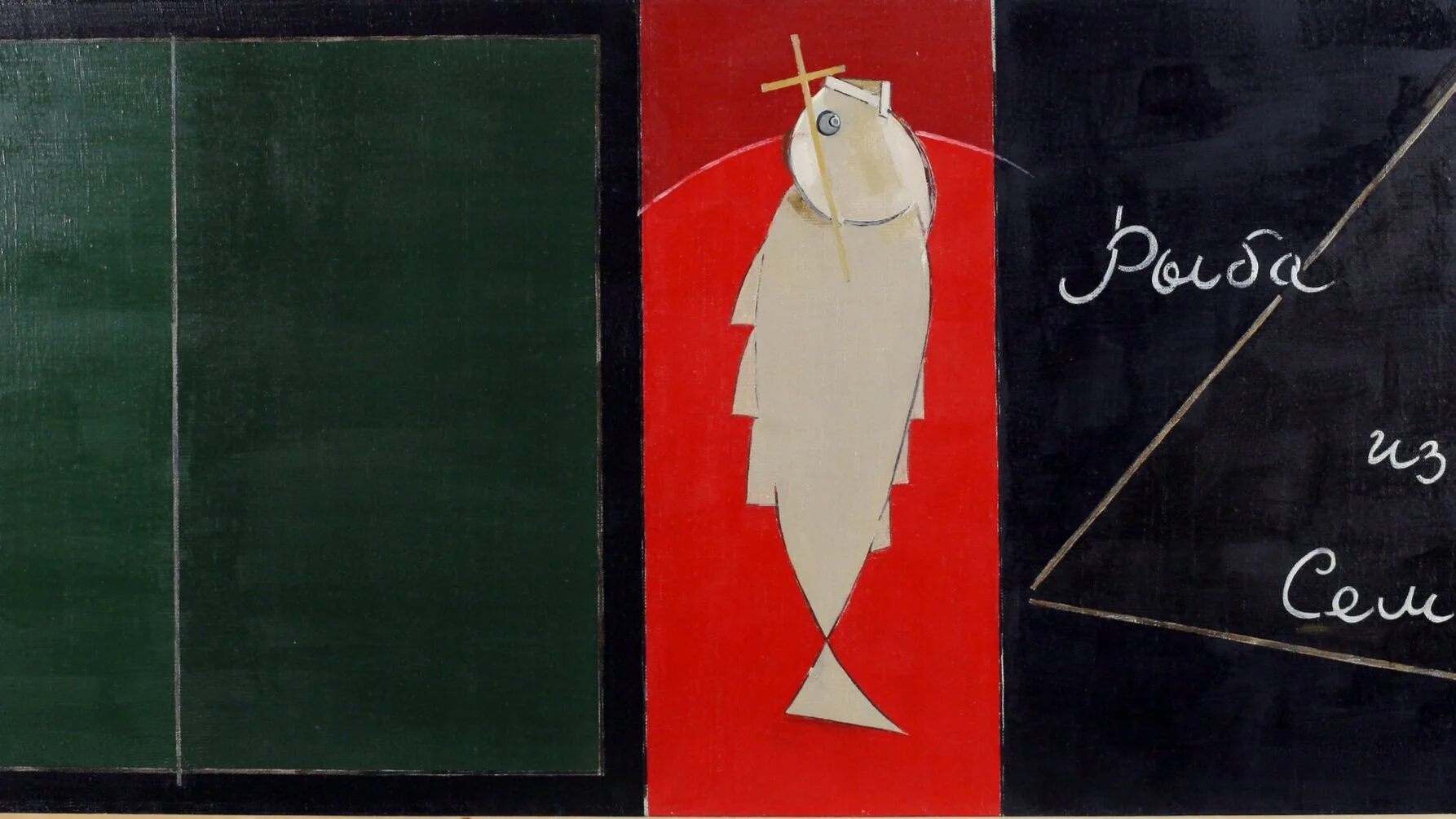
Eduard Steinberg, Fish from the town of Semenov, 1990
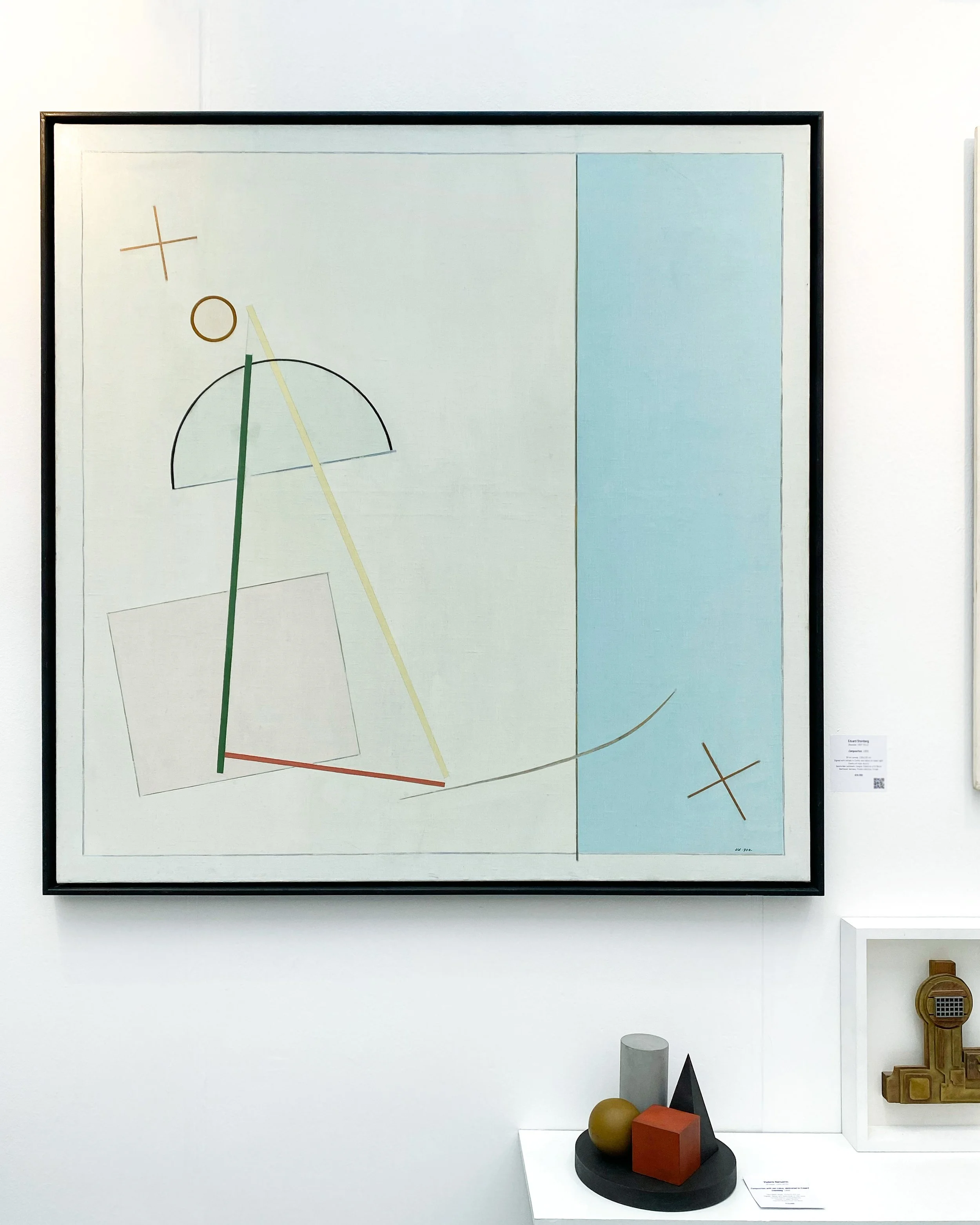
Eduard Steinberg, Composition, 1990