
Adrian Heath (English, 1920-1992)
Biography
Adrian Heath was a British artist, one of the key proponents for British abstraction in the post-war period. Heath began his studies at the Slade in 1940, but his education was interrupted by the outbreak of World War II and his joining of the RAF. As a pilot, Heath suffered a crash and was interned in several POW camps. At one of camps, he met the young Terry Frost, to whom he became a tutor during their imprisonment and encouraged Frost to pursue art on their return to England. After the war, Heath returned to his studies at the Slade. His early works are realist, in fact Heath’s first aspiration as an artist was to become a portrait painter like John Singer Sargent. With the influence of Victor Pasmore and Kenneth Martin, Heath reconsidered the entire direction of his work and began to experiment with abstraction. His first abstract work is exhibited at the London Group Exhibition in 1949, and by 1951 Heath is fully committed to pursuing abstraction.
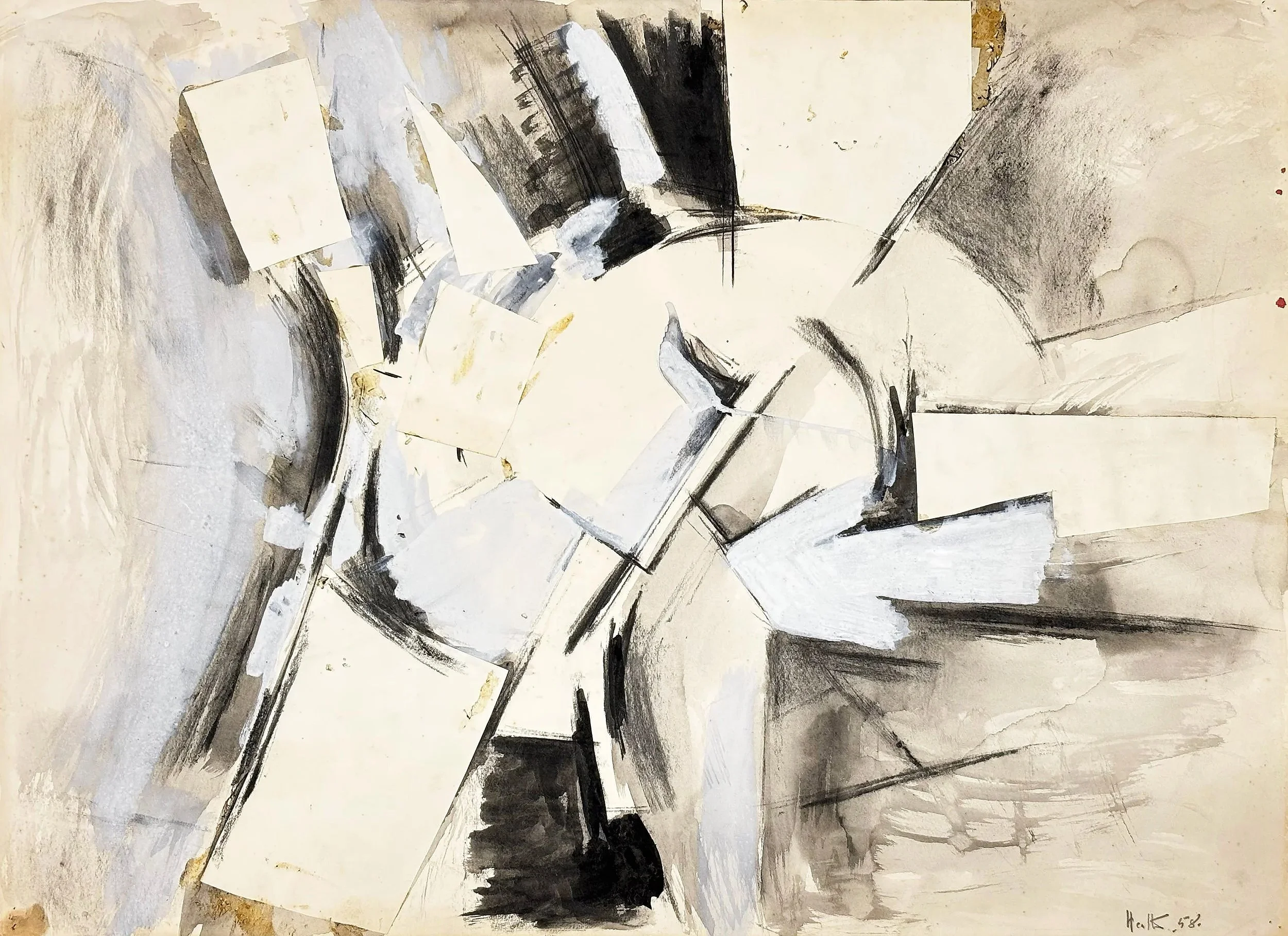
Often associated with Constructivism, Heath’s work was largely geometric. However, he did not utilise geometry as a way of achieving some perfect ‘static structures’ but rather was a way off creating and controlling movement. This dynamic dimension of Heath’s geometric abstract paintings is most evident in his early works, where the forms seem to be captured mid-expansion. This movement becomes even more apparent in Heath’s collages and works on paper from this period.
POA
Ink, watercolour, gouache and collage on paper
50.5x69 cm
Signed and dated lower right
In 1956 Heath began to teach at the Bath Academy of Arts at Corsham Court. This post was a catalyst for a defining change in Heath’s approach to painting. On one side he was engaged with teaching, interacting again with the classical genres of landscape and nude. On the other, his colleagues at Corsham included Gillian Ayres, Peter Lanyon and Howard Hodgkin. Abstract artists with a very different approach to painting. Heath began to reconfigure the geometry in his work, becoming looser, more vivid, allowing the figurative domain to re-enter his painting. Heath continued to utilise the vocabulary of abstraction, but his subject from now on was the female nude. Through the 60, 70s and 80s, Heath’s work continued to develop in this direction more vibrant and sensual.
In the 1950s, when first experimenting was abstraction Adrian Heath used a narrow colour palette of browns, ochres, purples, whites and blacks, designed to limit any association his works might have with the real world. Specifically, he avoided green and blue to avoid any landscape association, which is common in British abstraction. Heath’s later work from the 1970s and 80s, lets a whole spectrum of colours back in, some of which are included in the Colour wheel exercise.
Heath’s paintings and works on paper are held in many public art collections including the Tate, Government Art Collection, Arts Council Collection, National Galleries of Scotland, the Jerwood Collection, and the Victoria and Albert Museum.
Available works
Please see below the selection of available original artworks by Adrian Heath.
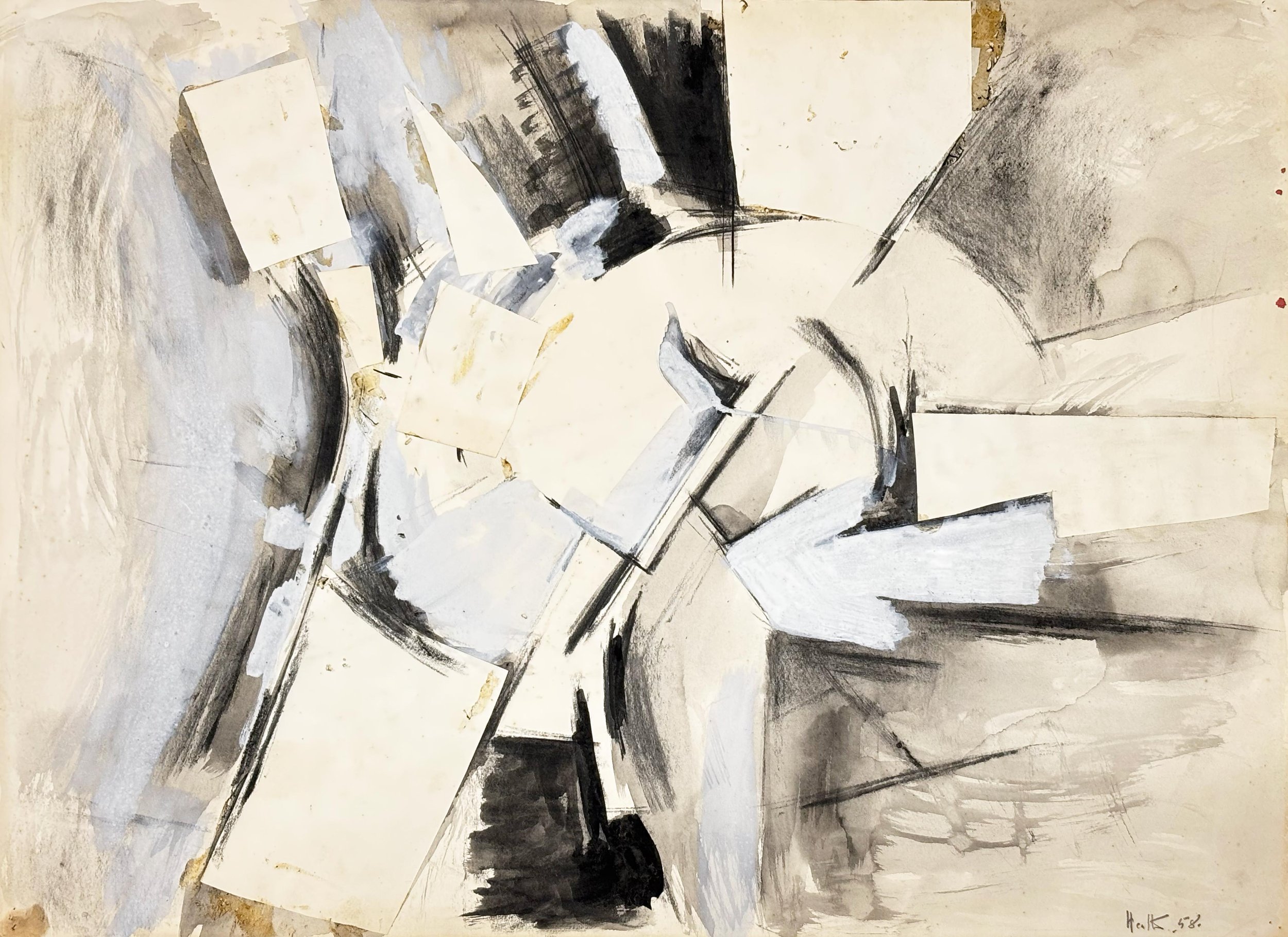
POA
Ink, watercolour, gouache and collage on paper
50.5x69 cm
Signed and dated lower right

Pencil, watercolour, and gouache on paper
28x38 cm
Framed: 48×58 cm
Signed and dated lower right

POA
Pencil, watercolour and bodycolour on paper
49x36 Cm
Framed: 59.5x47 cm
Initialed lower right
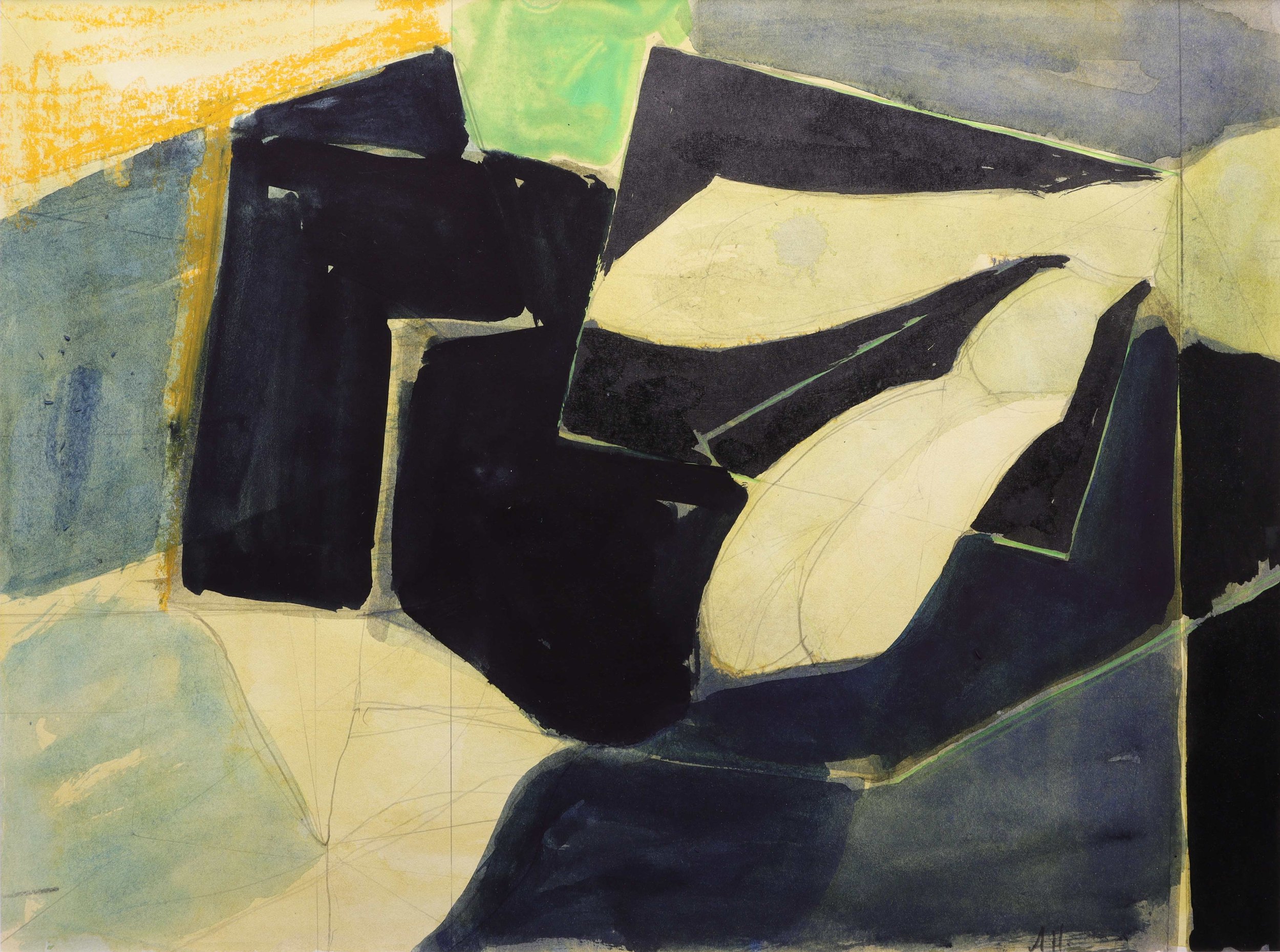
Gouache, watercolour and crayon on paper
28x38 cm
Signed with initials lower right
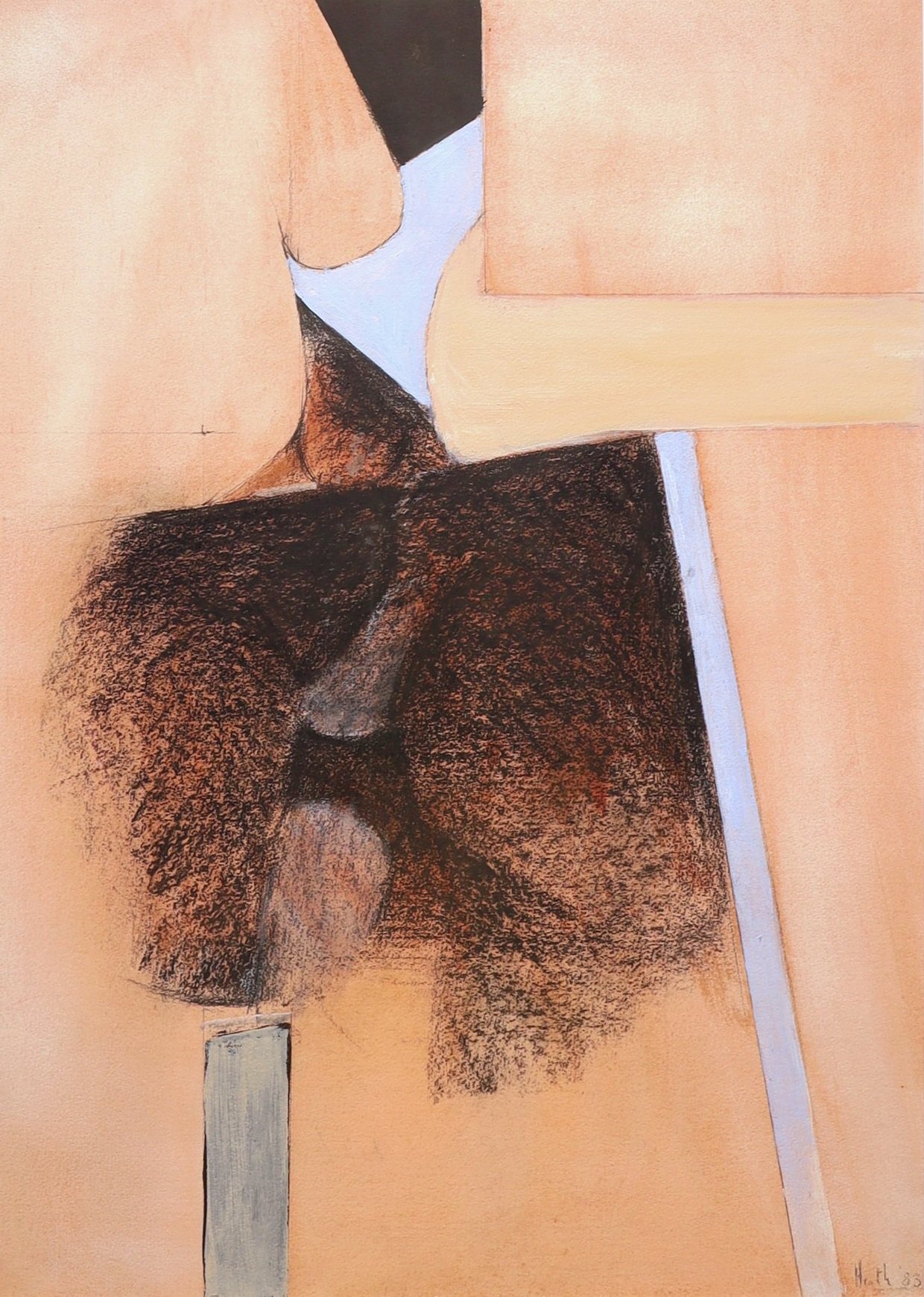
POA
Pastel, gouache and pencil on paper
73x53.5 cm
Framed: 93.5x73.5 cm
Signed and dated, lower right
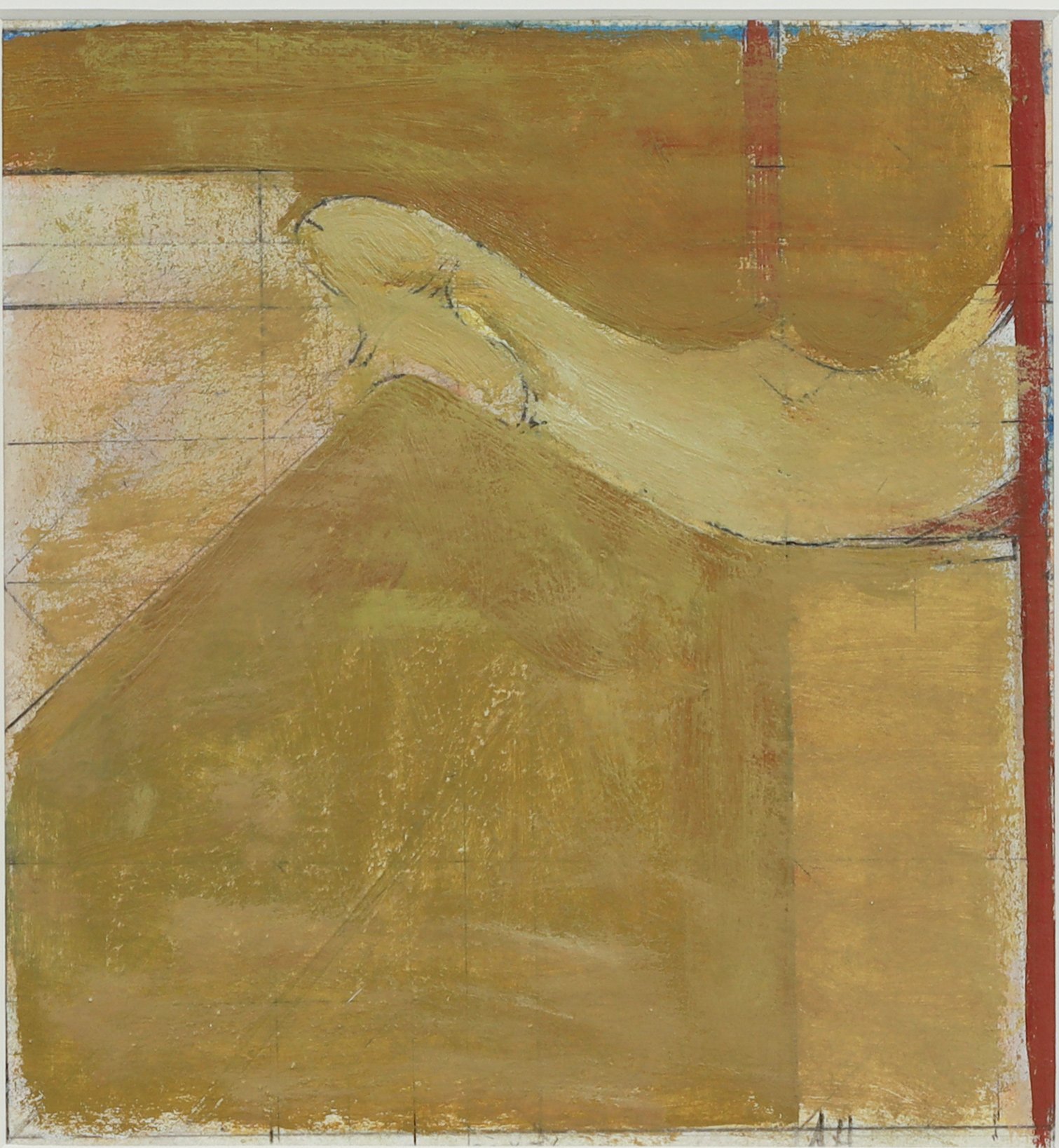
Gouache and pencil on paper
23x21.3 cm
Framed: 39x37.2 cm
Initialed lower right